Business Insurance
Best Practices for Implementing a Risk Assessment Program
September 1, 2026
Implement a stronger risk assessment program with nine best practices that improve resilience, accountability, risk visibility and decision-making.
Numerous business challenges can hinder operational resilience and cause losses, including cybersecurity threats, supply chain disruptions, evolving regulatory requirements and changing workforce dynamics. Fortunately, a comprehensive risk assessment program can help organizations identify risks, plan mitigation responses and reduce exposure. However, to be effective, the program must be supported by several key elements, including standardized processes, strong leadership and clear governance.
This blog post outlines nine best practices for implementing an effective risk assessment program and highlights the common challenges to avoid.
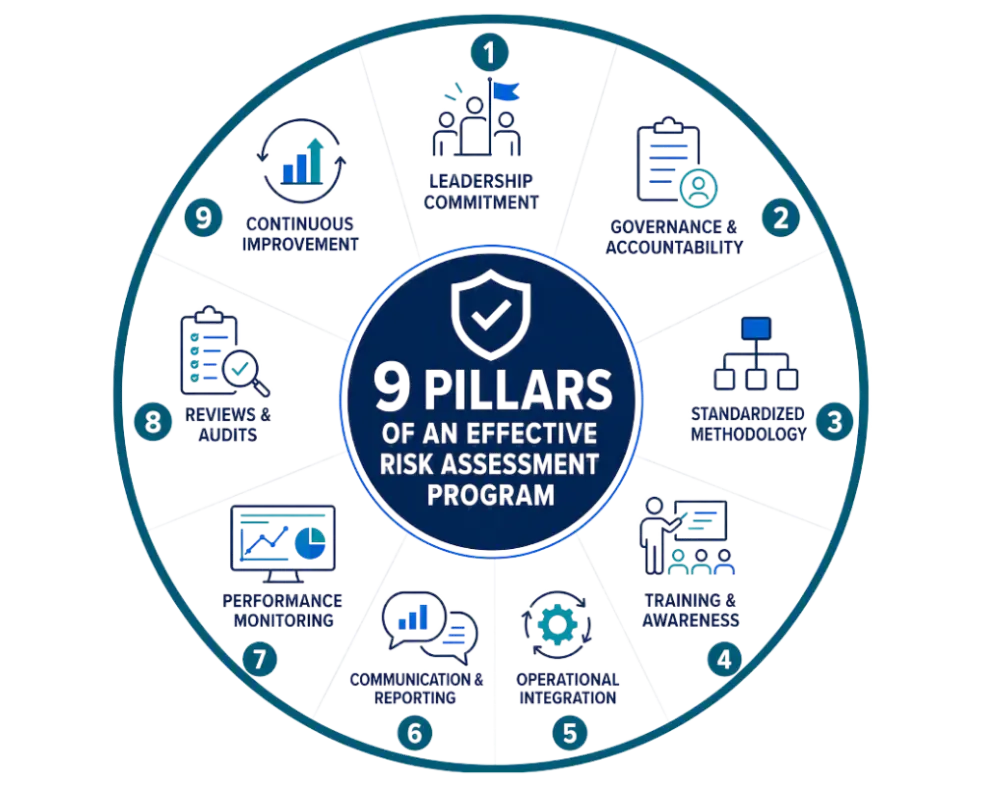
1. Secure Leadership Commitment
When implementing a risk assessment program, company leaders must do more than simply approve the policy. They should actively demonstrate their commitment by setting expectations, allocating resources, and fostering a culture in which risk is consistently identified, assessed, and managed. Leaders should treat business risk assessment as an integral part of day-to-day operations rather than a one-off compliance exercise, communicating its importance to employees to foster a shared sense of responsibility. Aligning risk assessment efforts with strategic objectives and allocating sufficient personnel, budget and resources can further reinforce the program’s importance in overall business success.
2. Establish Clear Governance and Accountability
Consistent program execution depends on clear governance structures. Organizations should define roles and responsibilities across the program to ensure those involved are accountable for managing and mitigating risk. Program administrators should be designated and risk owners assigned to specific exposures, acting as champions within their areas by providing guidance to employees, tracking mitigation progress and escalating issues where necessary. Documenting and periodically reviewing governance structures can help organizations ensure effective ongoing program oversight.
3. Standardize Processes and Methodologies
Establishing standardized risk assessment methodologies can help companies make meaningful comparisons across departments. Risk assessment programs should include defined criteria for rating risks based on likelihood and impact, clear classification categories (e.g., operational, financial, compliance), consistent documentation and reporting requirements, and a centralized system for recording and tracking risks. Methodologies that assess both inherent risk (before controls) and residual risk (after controls) can help organizations gain a clearer view of overall exposure.
4. Provide Training and Build Risk Awareness
Comprehensive workforce training is essential in supporting the delivery of risk assessment programs and should be tailored to specific roles (e.g., finance teams, HR managers, IT staff and customer-facing positions), so employees understand how risk identification and reporting relate to them. Training should go beyond mere compliance by actively seeking input and feedback from participants on the challenges they encounter day to day, as frontline staff often have the most direct visibility into operational risks.
5. Integrate Risk Management into Business Operations
Risk management should be embedded into routine business activities rather than being treated as a standalone initiative. Effective risk assessment programs integrate risk considerations into everyday decision making, including procurement, hiring, the adoption of new technologies and operational planning. In practice, this may involve adding risk questions to routine forms and documents, incorporating basic risk checks into approval processes, and making risk a regular part of team discussions.
6. Maintain Effective Communication and Reporting
Risk assessment programs depend on effective communication and reporting to ensure risks are understood company-wide. Organizations should establish clear reporting channels and expectations, including how frequently reports will be shared, to ensure that significant or emerging risks are raised as soon as they are identified. Reporting should provide leaders and stakeholders with a clear view of key risks, while giving operational teams sufficient detail to take action. Communicating lessons learned from incidents and near-misses through employee training reinforces risk awareness and helps strengthen risk assessment programs over time.
7. Monitor Program Performance
Organizations should track the success of their risk assessment programs by measuring key performance indicators (e.g., the number of risks identified, assessed and mitigated) and monitoring any trends or recurring issues that may indicate gaps or weaknesses. Monitoring corrective and preventive actions can also be helpful in ensuring identified risks drive meaningful improvements.
8. Conduct Periodic Reviews and Audits
Alongside performance monitoring, scheduled reviews and internal audits can help ensure that risk activities and corrective actions are completed on time and in line with company objectives. Third-party reviews or insurer-led assessments can further assess risk assessment program maturity and identify areas for improvement.
9. Promote Continuous Improvement
Since risks evolve rapidly, organizations should treat their risk assessment programs as dynamic rather than static, continuously updating policies, procedures and methodologies to reflect current conditions. Major organizational events (e.g., entering new markets or regulatory changes) should trigger a review to ensure programs reflect current risks and priorities. Overall, frequent incremental updates can ensure programs remain effective and responsive both now and in the future.
Common Challenges to Address
Risk assessment programs may fail to deliver their anticipated results if common challenges are not identified and addressed. These may include a lack of executive support resulting in risks being poorly prioritized; unclear roles and responsibilities leading to gaps in ownership; inconsistent risk assessment methodologies making it difficult to determine resource allocation; and insufficient workforce training causing limited awareness and understanding of risk among employees.
Additionally, poor recordkeeping, along with treating risk management as a one-off compliance exercise, can limit visibility into risks and leave organizations unprepared for new or emerging risks.
Organizations can mitigate these challenges by ensuring clear accountability, consistent processes and ongoing oversight to support a more effective, resilient risk assessment program.
Building Resilience
An effective risk assessment program relies on strong leadership, clear governance, consistent processes, employee engagement and ongoing oversight. By embedding these best practices, organizations can establish a robust risk assessment approach that supports informed decision making, aids regulatory compliance and minimizes exposure.
Looking to strengthen your organization's risk assessment capabilities? Hylant's Business Risk Consulting team can help you identify vulnerabilities, prioritize exposures, and build a more resilient organization.
The above information does not constitute advice. Always contact your insurance broker or trusted advisor for insurance-related questions.
Related Insights

Could Risk Management Have Saved Amelia Earhart?
October 9, 2026

Commercial Property Insurance Market Outlook: Opportunity Favors Prepared Buyers
October 7, 2026

Insurance Brokerage Consolidation: 7 Questions to Ask After Your Broker Is Acquired or Merges with Another Firm
September 25, 2026