Loss Control
Could Risk Management Have Saved Amelia Earhart?
Today's technology and planning standards address many of the hazards she faced.
October 9, 2026
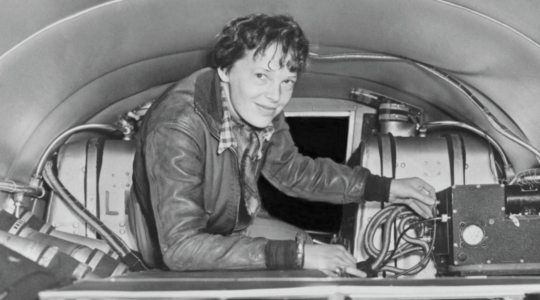
One of the biggest mysteries in aviation is what happened to Amelia Earhart. On June 1, 1937, the history-making pilot took flight in a bid to become the first woman to fly around the globe. On July 2, 1937, over the Pacific Ocean between New Guinea and tiny Howland Island, she transmitted her last message and was never heard from again. Despite numerous searches over the decades, Earhart and her plane have never been found.
CNN recently reported that researchers from Purdue University are en route to Nikumaroro, a remote island in the western Pacific, to investigate a mysterious object identified in satellite imagery. Could this latest expedition finally uncover Earhart's missing aircraft and shed light on one of aviation's greatest mysteries?
That news story has prompted an interesting question: If Earhart’s around-the-world flight were proposed today, what information or mitigation strategies would an insurer recommend?
Improve Navigation Redundancy
The most concerning part of the proposed flight was from Lae, New Guinea, to Howland Island. It was more than 2,500 miles and would take an estimated 18 to 20 hours to complete. Furthermore, Howland Island is approximately two miles long, making it extremely difficult to find with the limited navigation and communication technology available in 1937.
Today, an insurer would expect:
- GPS and satellite navigation
- Multiple independent navigation systems
- Real-time flight tracking
- Automated position reporting
The lack of reliable position awareness would likely be considered an unacceptable single point of failure.
Strengthen Communications
The United States Coast Guard Cutter Itasca was stationed off Howland Island during the final stage of Earhart's flight before radio contact was lost. The ship provided two-way radio communication for navigation information and weather reports. Unfortunately, technical difficulties prevented reliable two-way communication from being fully established.
Today, an insurer would likely require:
- Satellite communications
- Multiple radios and frequencies
- Emergency locator transmitters
- Continuous contact procedures
The inability to communicate during an emergency would be viewed as a critical exposure.
Reevaluate Fuel Margins
Earhart left New Guinea with 1,100 gallons of fuel, widely considered enough to reach Howland Island with a reasonable safety margin, making her report that "gas is running low" all the more alarming. Modern underwriters generally dislike plans that leave little room for error. They would likely ask:
- What is the contingency fuel reserve?
- What is the diversion plan?
- What weather scenarios (such as strong headwinds) have been modeled?
- What happens if the destination cannot be located?
The goal would be to avoid a situation where a navigation problem immediately becomes a survival situation.
Develop a Formal Emergency Response Plan
While no one expects an emergency, insurers require operators to plan for the possibility that one will occur. The question is not whether something could go wrong, but whether the crew is prepared if it does.
Today, insurers would likely want a documented response strategy covering:
- Search and rescue coordination
- Alternate landing locations
- Medical emergencies
- Ditching and survival procedures
- Emergency supplies and signaling equipment
The objective is simple: ensure that an unexpected event remains a manageable incident rather than becoming a tragedy.
Consider Crew and Human Factors
Earhart was an accomplished aviator, but according to the Smithsonian, she lacked several skills that could have helped her navigate to safety. Neither she nor her navigator, Fred Noonan, was well-trained on the plane’s radio equipment. Neither was proficient in Morse code, limiting their ability to use some of the radio-navigation aids available to support the flight.
Today's insurers would expect extensive training and proficiency testing on the specific navigation and communications systems critical to the mission. When a flight depends on finding a two-mile-long island in the middle of the Pacific, there is little margin for uncertainty.
The Underwriter's Bottom Line
For this planned flight, the insurer's recommendation might sound something like:
This is an ambitious, high-profile flight over a remote ocean environment. We can insure it, but only if navigation, communication, fuel planning, emergency response, and crew preparedness are strengthened to eliminate avoidable points of failure.
In other words, “Show us your controls.” It’s something carriers say every day as today’s organizations enter renewals, for the same reasons: to protect people and property.
Related Reading: Commercial Insurance Market Update
The above information does not constitute advice. Always contact your insurance broker or trusted advisor for insurance-related questions.
Related Insights
Could Risk Management Have Saved Amelia Earhart?
October 9, 2026

Commercial Property Insurance Market Outlook: Opportunity Favors Prepared Buyers
October 7, 2026

Insurance Brokerage Consolidation: 7 Questions to Ask After Your Broker Is Acquired or Merges with Another Firm
September 25, 2026